Saturday, March 17, 2012

Bloom: 28,000 Potted Flowers Installed at the Massachusetts Mental Health Center

Bloom: 28,000 Potted Flowers Installed at the Massachusetts Mental Health Center:

Bloom: 28,000 Potted Flowers Installed at the Massachusetts Mental Health Center installation flowers art
One of the tiny offices on the third floor, with orange tulips at mid-day.

In 2003 a building housing the Massachusetts Mental Health Center (MMHC) was slated for demolition to make way for updated facilities. The closure was a time for reflection and remembrance as the MMHC had been in operation for over 9 decades and had touched countless thousands of patients and employees alike, and the pending demolition presented a unique problem. How does one memorialize a building impossibly rich with a history of both hope and sadness, and do it in a way that reflects not only the past but also the future? And could this memorial be open to the public, not as a speech, or series of informational plaques, but as an experience worthy of they building’s unique story?
To answer that question artist Anna Schuleit was commissioned to do the impossible. After an initial tour of the facility she was struck not with what she saw but with what she didn’t see: the presence of life and color. While historically a place of healing, the drab interior, worn hallways, and dull paint needed a respectful infusion of hope. With a limited budget and only three months of planning Schuleit and an enormous team of volunteers executed a massive public art installation called Bloom. The concept was simple but absolutely immense in scale. Nearly 28,000 potted flowers would fill almost every square foot of the MMHC including corridors, stairwells, offices and even a swimming pool, all of it brought to life with a sea of blooms. The public was then invited for a limited 4-day viewing as a time for needed reflection and rebirth.

Perhaps no single installation or piece of art seen on Colossal has touched me more deeply than Bloom. After learning about it for the first time a few weeks ago I decided to reach out to Anna and ask if she might be willing to share some photos and information about the genesis and execution of such an incredible installation.

Bloom: 28,000 Potted Flowers Installed at the Massachusetts Mental Health Center installation flowers art
Red Regina Mums in the hallway that was the last one to close—it used to be one of the busiest homeless shelters in Boston.


Bloom: 28,000 Potted Flowers Installed at the Massachusetts Mental Health Center installation flowers art

The Child Psychiatry unit with white tulips.
Bloom: 28,000 Potted Flowers Installed at the Massachusetts Mental Health Center installation flowers art

The basement of the building was covered with 5,600square feet of live sod, which was raked and watered throughout the day, and continued to grow.


Bloom: 28,000 Potted Flowers Installed at the Massachusetts Mental Health Center installation flowers art
Pink Heather in one of the patients’ waiting rooms. These flowers had traveled the farthest to be part of ‘Bloom’—from California.


Bloom: 28,000 Potted Flowers Installed at the Massachusetts Mental Health Center installation flowers art
One of the longest axes of the building: white mums and orange tulips on the first floor


Nicolas Deshayes

Nicolas Deshayes:


Nicolas Deshayes

Work from his oeuvre.
“Nicolas Deshayes’ sculptural installations use materials such as stainless steel and PVC to embrace the glossy aesthetics of 21st century design. Despite such fascinations, his works maintain a human presence in the forms of glutinously rich, bodily allusions, which engage with materials in ways that distort the ordinary. Deshayes states, “I create hybrid sculptures that gather multiple familiar cultural and stylistic references in a way that leads to a strange sense of hyper-materiality.”"- Jonathan Viner Gallery


Ruins in the distance by Daniel Karlsson

Ruins in the distance by Daniel Karlsson:


"Ruins in the distance" is a visual performance series made by composer and musician Daniel Karlsson. The following videos have been recorded in real time meanwhile Daniel played the visuals using physical controllers, changing the parameters of the audio and video synthesis. 


Daniel describes the audio is made by means of digital feedback in a computer and the video is the result of analysis of the audio. The visuals show some multiplied basic geometric shapes such as spheres and cylinders which take the analysis data from the audio. See more;


All of the following videos are real time performances.

Ruins in the distance (excerpt II) from Daniel Karlsson on Vimeo.


World Domination took place on 19th January at Fylkingen. Performed by Jonatan Liljedahl using SuperCollider, Mattias Petersson using SuperCollider and modular synthesizers, and on the right is  Daniel Karlsson using SuperCollider, Audiomulch and projection.


Daniel Rybakken and Andreas Engesvik

Daniel Rybakken and Andreas Engesvik:


Daniel Rybakken and Andreas Engesvik
Work from Colour.
“Using sheets of coloured glass placed freely in front of a light source, Colour invites the user to mix various hues. I was also intrigued here by the exploded concept of a lamp, formed not only of multiple components, but by multiple objects too.” – Daniel Rybakken
via Zero 1.


Gibbon

(title unknown):


“Gibbon”, 2011 by Daniel Dewar & Grégory Gicquel. Wool, acrylic.

Pouliguen

(title unknown):


»Pouliguen«, 2011 by Marcelo Moscheta.


ARTLOG’s Art Experience Series

ARTLOG’s Art Experience Series:

ARTLOG has kicked off a new event program with curated experiences every Saturday afternoon. We launched the series this past weekend, selling out of an incredible Armory Week package that included a private art-advisor-led tour of the Armory Show, access to the VIP openings of two others fairs, and a private cocktail party. Read below for information on upcoming events.
A Private Art Crawl on the LES

Saturday, March 17, 4:00-8:00 p.m.
ARTLOG leads a private tour through three incredible galleries, where you will meet the artists, enjoy wine, and conclude with a private cocktail party. The event starts at Zürcher Studio, a gallery based in both Paris and NYC, where New York-based artist Paul DeMuro will discuss the current show, Techno Nature. Then we will head over to The Hole, where Kathy Grayson, owner and founder, will guide us through “Two Heads are Better than One" on the final day of the show.Over at American Contemporary (formerly the acclaimed Museum52 based in NYC and London), meet gallery owner Matthew Dipple and artist Jeffrey Gibson, whose work reflects his Native American ancestry. End the afternoon with Appleton Estate rum cocktails and Evian at the elegantly retro Ella lounge.
ARTLOG subscribers can purchase tickets for $50 instead of $75 using the code ARTLOGVIP.


Installation view, John Chamberlain: Choices. Photo: Grace-Yvette Gemmell.

Guggenheim & Jewish Museum Private Tours and Reception

Saturday, March 24, 4:30-8:00 p.m.
Enjoy a docent-led tour of the Guggenheim’s John Chamberlain retrospective and after-hours tours of the Kehinde Wiley show at the Jewish Museum, followed by a mixologist-led cocktail reception inside the Jewish Museum.
ARTLOG subscribers can purchase tickets for $50 instead of $75 using the code ARTLOGVIP.


Installation view, Walter de Maria: The Broken Kilometer 1979. Photo: Dia Art Foundation.

Soho Art Crawl


Propulsion Painting by Evan Roth

Propulsion Painting by Evan Roth:


Today 14th March opens a new solo exhibition by Evan Roth called "Welcome to Detroit" at Eastern Michigan University.Is Detroit where Evan has been living and working for this exhibition along six weeks, preparing new works like the Propulsion Painting series, (see the videos into the post). In this exhibition Evan is going to show some of his latest projects made over the last and current year such as Skymall Liberation, Personal Internet Cache Archive, One GIF composition among other experimental and also funny works. See more;


"Evan Roth's exhibition, Welcome to Detroit, will feature nearly all-new work, much of it made during his residency. The work follows his core conceptual framework of appropriating popular culture and combining it with a hacker's philosophy to highlight how small shifts in visualization can allow us to see our environment with new eyes, whether online, at home, in the city or at the airport. His work acts as both a mirror and vault to contemporary society, creating work that reflects and withstands a world of rapid advancements in computing power, changing screen resolution and repainted city walls.

For Welcome to Detroit, Evan mines everything from the spray paint can, to hip-hop music, to airplane shopping magazines and flight safety cards, resulting in a show that moves freely across media, but always with a sense of pop cultural pranksterism. From individual art objects to video pieces to documentation, the work is designed to simultaneously serve as a record of activity and creative output, while also underscoring important issues concerning copyright, public space, and our offline and online identities." Curated by Gregory Tom.


This Week in NYC

This Week in NYC:

Still tired from Armory Week? Well rest up and get ready to hit the galleries because we couldn’t even choose between all the great shows opening this week. There’s a survey of Keith Haring’s early work at the Brooklyn Museum, an exhibition of exquisite corpses from Surrealism to the present at MoMA, and a conversation with Kehinde Wiley about his current show at the Jewish Museum. On the Lower East Side, Lisa Cooley Fine Art opens a brand new 4,800 square-foot space with a group exhibition inspired by Frank O’Hara’s poem “Today.”
Hernan Bas, who currently has an installation at the Louis Vuitton store in Miami and a solo exhibition at the Kunstverein Hannover in Germany, has an exhibition opening at Lehmann Maupin (Chelsea) on Thursday. Other highlights this week include David Lynch’s mixed-media paintings at Tilton Gallery, Fred Wilson at Pace Gallery, and Jim Shaw at Metro Pictures.
For a full listing of this week’s events, click here.
Wednesday, March 14
Midtown
Exquisite Corpses: Drawing and Disfiguration

Museum of Modern Art (MoMA), 11 W. 53rd St.
Peter Dayton: rocknrollshrink

fordPROJECT, 57 West 57th Street, Penthouse

Through April 5, call to schedule an appointment
Uptown
Artists in Dialogue with Joan Jonas and Kate Gilmore

National Academy Museum, 1083 Fifth Avenue
Thursday, March 15
Lower East Side
Ben Wolf: Fresh Hordes

KESTING / RAY, 30 Grand St.


Ben Wolf, Tooth and Nail. Courtesy of KESTING / RAY.

Materiality

Allegra LaViola Gallery, 179 East Broadway
Chelsea
Taeyoon Choi: Speakers’ Corners

Eyebeam, 540 West 21st Street
George Boorujy: Blood Memory

PPOW Gallery, 535 West 22nd Street, 3rd Floor
Joe Pflieger: Primary Structures

Monya Rowe Gallery, 504 West 22nd Street, 2nd Floor
Paul Glabicki: Order

Kim Foster Gallery, 529 West 20th Street
Kristof Wickman & Chadwick Augustine: Friend’s Bones

RARE, 547 West 27th Street, #514
Hernan Bas: Occult Contemporary

Lehmann Maupin, 540 West 26th Street


Hernan Bas, Untitled, 2011. Courtesy of Lehmann Maupin.

Kris Kuksi: Triumph

Joshua Liner Gallery, 548 West 28th Street , Third Floor
Kevin Erskine: Supercell

Milk Gallery, 450 West 15th St.
Uptown
John Newman: New Work

Tibor de Nagy, 724 Fifth Ave.
Kehinde Wiley in Conversation with Lola Ogunnaike

The Jewish Museum, 1109 Fifth Ave.
Friday, March 16
Lower East Side
Today

Lisa Cooley, 107 Norfolk


Alice Channer, Pocketing, 2011. Courtesy of Lisa Cooley Fine Art.

Across Doom Hopes the Guiding Fever

LMAKprojects, 139 Eldridge St.
Little Languages/Coded Pictures

Lesley Heller Workspace, 54 Orchard St.
Chelsea
Dan Walsh

Paula Cooper Gallery, 534 West 21st street
Mitch Epstein

Sikkema Jenkins, 530 West 22nd St
Midtown
Deco Japan: Shaping Art and Culture, 1920–1945

Japan Society, 333 East 47th Street


K. Kotani, The Modern Song (Modan bushi), 1930. Photograph courtesy of The Levenson Collection.

Uptown
Fiction/Non-Fiction

Adam Baumgold Gallery, 60 East 66th street
David Lynch

Tilton Gallery, 8 East 86th Street
Brooklyn
Dave Miko: An Exhibition of Painting Obscured by an Evening of Performance

Real Fine Arts, 673 Meeker Ave
Keith Haring: 1978-1982

Brooklyn Museum, 200 Eastern Pkwy.


Keith Haring, Untitled, 1978. Courtesy of the Keith Haring Foundation.

Stikman: 20

Pandemic Gallery, 37 Broadway
Knickerbocker Mini Maw

Storefront Bushwick, 16 Wilson Ave.
Queens
A.I.R Time

Flux Factory, 39 – 31 29th Street
Saturday, March 17
Chelsea
Jim Shaw

Metro Pictures, 519 West 24th Street
Fred Wilson: Venice Suite: Sala Longhi and Related Works

The Pace Gallery, 510 W. 25th St.


Fred Wilson, detail of Sala Longhi, 2011. Courtesy of Pace Gallery.

Lower East Side
ARTLOG Nolita/LES Private Art Crawl
Francesca DiMattio: Table Setting and Flower Arranging

Salon 94 Bowery, 243 Bowery
Stuck On You

Recession Art, 9 Clinton St.
Queens
Translating Spaces: Translating Law

SculptureCenter, 44-19 Purves Street

C.A.2

C.A.2:
.
c.a.2 1

c.a.2 2

c.a.2 3

c.a.2 4

c.a.2 5

c.a.2 7

c.a.2 8

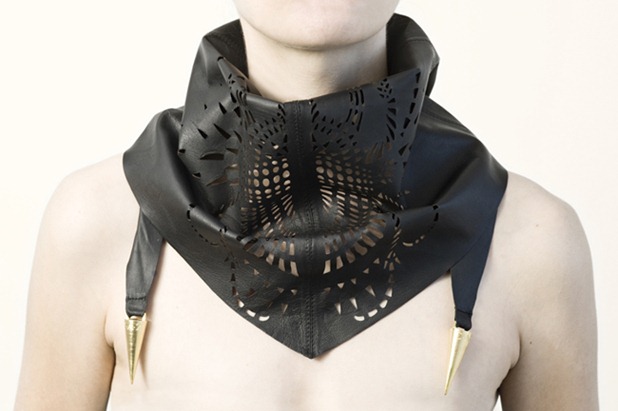
leather accessories collection by C.A.2


Carlo Bernardini

Carlo Bernardini:


Carlo Bernardini

Work from his oeuvre.
“Paper is simply paper as long as it is white, but once you draw on it, it becomes ‘a drawing’. A design in light is a mental drawing that uses dark space.

Fibre optic drawings are in harmony with the place itself, the light creating an interrelation by overcoming the physical walls and transforming the environment in a deceptive way, pushing it to the limits of an illusionary dimension. An imaginary drawing, executed with the light of optical fibre, can go beyond the walls, where the wholeness can only be reconstructed as a puzzle in the viewer’s mind. The installation takes over the space and incorporates it.

Spatial forms develop a challenging relationship within the space as the optical fibre line passes from room to room piercing the walls and the floors, combining the external environment with the internal one: ‘Permeable space’, the place where light generates space.” – Carlo Bernardini


Traveling to Mount Pom Pom

Traveling to Mount Pom Pom:

Furry animals, mountains of scrap fabric, and banana-shaped benches: there’s no doubt about it, this is Misaki Kawai’s studio. Welcome to Mount Pom Pom, the imaginary mountain from which nuggets of the artist’s crazy imagination explode like confetti.
“Anything can come out of Mount Pom Pom,” says Misaki in her stained, multicolored painter’s blouse, “just like from my head.”
For the past decade, Misaki Kawai has seduced audiences worldwide with bizarre and beautiful creations, from Sweden to her native country of Japan. On March 14th, the Children’s Museum of the Arts will reintroduce her work to the American public with Love From Mt. Pom Pom, her first New York solo show in five years.
Visitors will discover a giant, long-haired pink dog, the main piece of the show, which comes with a dozen larger-than-life combs. “When people will see them, they’ll immediately know what do do,” explains Misaki, mimicking the grooming of a gigantic, invisible animal.


Misaki Kawai’s studio. Photo: Pauline Eiferman.

In memory of her 2002 exhibition, Air Show, there will be a miniature theater performing Hair Show “with puppets and muppets and lots of hairy things,” she says, giggling. Misaki has also made a herd of colorful furniture pieces: hair tables, a serpent workstation, and a long, squashed-breast bench.
“We want to invite the visitors to play and create,” explains Prescott Trudeau, the curator of the exhibition. Love From Mt. Pom Pom continues the CMA’s mission to inspire kids and incite them to make art with activities and workshops.
Visitors will be handed an Arty Party booklet, which they can customize thanks to a pouch full of scrap material. There will also be a costume room and a performance area.
It’s the first time Misaki has had an exhibition in a children’s museum, but it didn’t change her creative process much. “Except," she adds, "I made the furniture lower and the costumes smaller.” She hopes that all the family members who come and see the show will interact with her pieces. “Children get it right away,” she says. “You have to train some adults.”


Misaki Kawai’s studio. Photos: Pauline Eiferman.

Misaki says her playful work has been compared to the Japanese manga concept of heta-uma, which translates to “bad technique, good sense,” but her technique is far from being bad. In her ephemeral studio in downtown Manhattan, she’s got bags of meticulously collected materials, from Thai pom-poms to funny hats she found in India, and from Nepalese rice bags to Tibetan ribbons.
Her travels are a source of inspiration. “When I find these things,” explains Misaki, “I just get really excited to make something with them.” Her last destinations include Beijing and Mongolia. “For me, working is like traveling,” says Misaki. “I don’t know where I’m going, but if I just keep moving my hand I will end up somewhere else.”


Misaki Kawai’s studio. Photo: Pauline Eiferman.

More about the Children’s Museum of the Arts:
The CMA is the only institution in New York City collecting international children’s artwork, and the only one that focuses on being a place for children to make art. Last year the museum moved into a new 10,000-square-foot space designed by Work Architecture Company, the same firm behind MoMA PS1’s urban farm in 2008. An innovative, color-coded homage to creativity, the new facilities are complete with a bartender dispensing modeling clay at the “clay bar."


The Children’s Museums of the Arts. Courtesy Work Architecture Company.


maria sardari

maria sardari:

maria sardari 1

maria sardari 2

maria sardari 3

maria sardari 4

maria sardari 6

photography by maria sardari


“Ice Angel” by Dominic Harris – From snow angels to angelic forms

“Ice Angel” by Dominic Harris – From snow angels to angelic forms:


“Ice Angel” by Dominic Harris and Cinimod Studio is an interactive artwork that provides the participants a glimpse of themselves depicted in angelic form. Inspired by the way children create snow angels in fresh snow, Ice Angels introduces the digital twist of being a performance portrait device that pairs the participant to their angel identity.